
How CCM Programs Use Contactless Vitals for Monthly Check-Ins
An analysis of how CCM programs use contactless vitals for monthly check-ins, lower-friction engagement, and better chronic care follow-up between visits.
How CCM Programs Use Contactless Vitals for Monthly Check-Ins
CCM contactless vitals monthly check in workflows are getting attention for a practical reason: chronic care programs need patient signal every month, but many Medicare patients do not want another device on the kitchen table. Chronic care management only works when teams can document non-face-to-face care, keep the care plan current, and decide who needs outreach before a small problem becomes an expensive one. That is where contactless vitals fit. They give CCM teams a lighter monthly check-in option for patients who are tired of cuffs, wearables, and portal logins.
"Patients with multiple chronic conditions are the costliest patients, accounting for 71% of all health care spending and 93% of Medicare spending." — Agency for Healthcare Research and Quality, Multiple Chronic Conditions Chartbook
Why CCM monthly check-ins need low-friction vital sign capture
CMS defines chronic care management around patients with two or more chronic conditions expected to last at least 12 months, with significant risk of death, acute exacerbation, decompensation, or functional decline. CMS also requires the operational basics: patient consent, a comprehensive care plan, and at least 20 minutes of qualifying non-face-to-face clinical staff time each calendar month for standard CCM.
That monthly structure matters. CCM is not built around one dramatic intervention. It is built around steady, repeated contact. A monthly check-in has to do a few things well:
- confirm the patient is still engaged
- give the care team a current read on status between visits
- help document care coordination work
- identify who needs escalation, education, or medication follow-up
The problem is that many chronic populations have low tolerance for hardware-heavy monitoring. Older adults with heart failure, COPD, diabetes, or multimorbidity are often already managing medications, specialist appointments, and transportation barriers. Adding another connected device can shrink participation before the program has time to work.
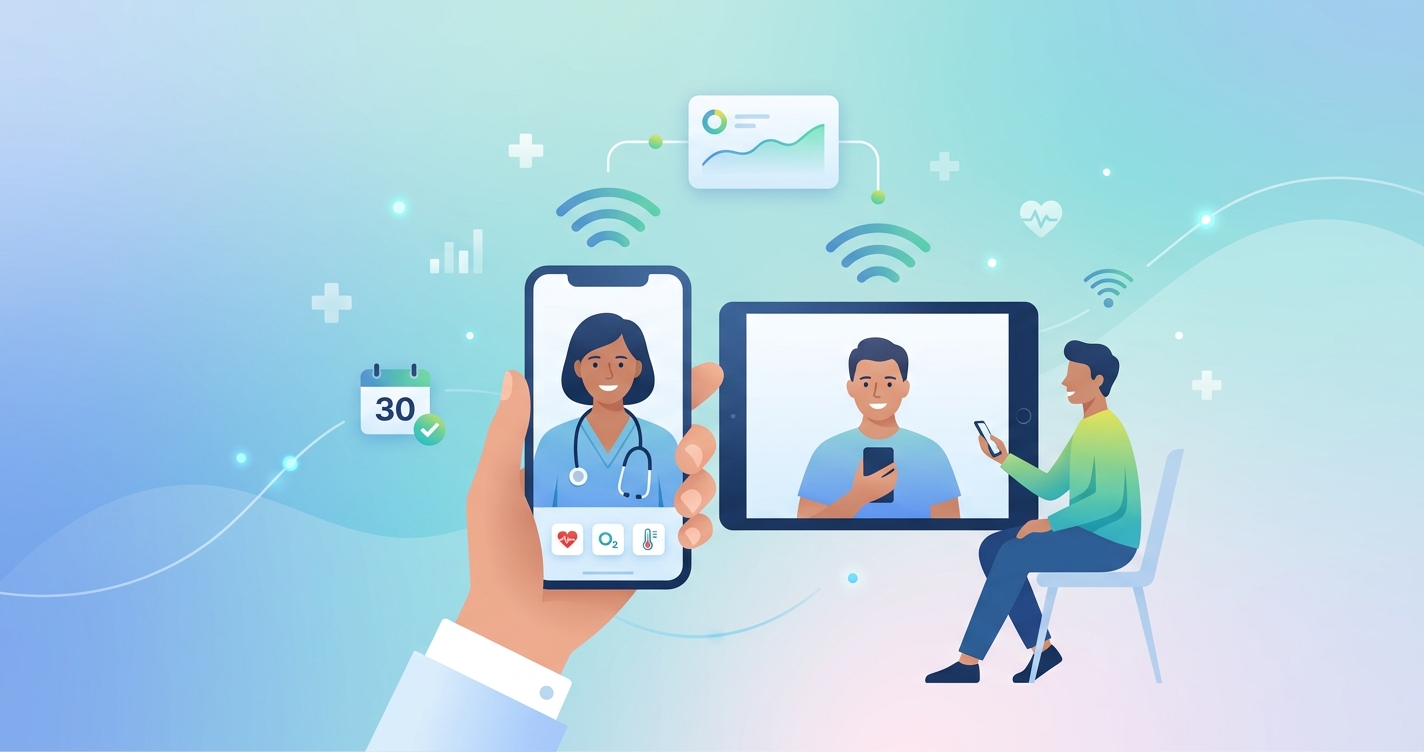
Contactless vitals change that equation because the check-in can happen on a phone, tablet, or kiosk camera. The operational value is not that CCM suddenly turns into RPM. It is that monthly outreach can include fresh physiologic signal with less setup burden.
| Monthly CCM check-in model | Traditional device-dependent approach | Contactless vitals approach |
|---|---|---|
| Patient effort | Device setup, charging, syncing, repeat measurements | Short camera-based check-in on an existing screen |
| Staff visibility | Often symptoms plus sporadic readings | Symptoms plus current vital-sign trend data |
| Best-fit patient | Highly engaged patients comfortable with equipment | Broader chronic population with device fatigue |
| Monthly workflow | Call first, data second | Data-informed call or follow-up |
| Program risk | Drop-off from monitoring burden | Better odds of consistent monthly participation |
| Main CCM advantage | Documented outreach and care planning | Documented outreach with added physiologic context |
How CCM programs use contactless vitals in monthly check-ins
In practice, most CCM teams do not need a complicated workflow. They need a reliable monthly rhythm.
A common model looks like this:
1. The patient completes a short monthly scan
Before or during the monthly CCM contact window, the patient uses a phone or tablet camera for a brief check-in. That creates current signal around heart rate, respiratory rate, heart rate variability, or related trend data, depending on the program design.
2. The care coordinator reviews change from baseline
The point is rarely one isolated number. The real question is whether the patient's status looks different from last month or from their usual pattern. A stable patient may need routine reinforcement. A patient with rising respiratory rate or a missed string of check-ins may need more attention.
3. The monthly CCM conversation gets more specific
Instead of asking broad questions alone, staff can anchor the conversation around what changed. Has the patient been more short of breath? Did medications change? Was there a recent urgent care visit? Is the patient sleeping poorly, missing meals, or having trouble with refills?
4. The care plan is updated and the next step is documented
That may mean education, physician review, a telehealth follow-up, referral, or simply a decision to watch the patient more closely next month. CCM programs live or die on documentation and follow-through, so the check-in has to feed the care plan rather than sit in a separate dashboard.
This is why contactless workflows appeal to chronic care management companies and ACO-aligned organizations. The monthly task stays simple enough to repeat.
Where monthly contactless check-ins help most in chronic care
Heart failure follow-up
Heart failure patients often drift before they crash. Small changes in resting heart rate, respiratory rate, or overall physiologic stability can matter between office visits, especially after discharge or medication adjustment. A monthly contactless check-in gives staff another way to spot which patients need a call now rather than next week.
COPD monitoring between routine visits
Respiratory change is one of the clearest reasons chronic care teams want fresh monthly signal. A 2024 review by Wei Chen, Zhe Yi, Lincoln Jian Rong Lim, Rebecca Qian Ru Lim, and colleagues in Frontiers in Bioengineering and Biotechnology described rPPG and related contactless methods as promising for measuring heart rate, respiratory rate, and other physiologic signals without direct contact. For COPD-heavy panels, that matters because respiratory drift often appears before a patient clearly reports worsening status.
Diabetes and multimorbidity programs
Patients with diabetes often have overlapping cardiovascular, renal, or respiratory risk. For them, the monthly CCM check-in is less about one condition and more about whether the patient is moving off baseline in a way that justifies outreach.
Frail older adults with device fatigue
This may be the biggest operational use case. If a patient will not keep up with another device, a simpler camera-based workflow may preserve the monthly touchpoint that the CCM program needs.
Readers looking at related chronic care use cases may also want our analysis of how ACOs monitor high-risk patients between visits and camera-based monitoring for multiple chronic conditions.
Current research and evidence
Several studies and policy sources help explain why contactless vitals fit CCM workflows.
- CMS's MLN guidance on Chronic Care Management says standard CCM requires at least 20 minutes of qualifying clinical staff time per month and centers the work on care-plan maintenance, coordination, and patient access. That monthly requirement is why programs need a repeatable check-in model.
- Charles Stoecker, Lizheng Shi, Dongzhe Hong, and Yixue Shao reported that Medicare beneficiaries with diabetes who received non-face-to-face chronic care management had 0.012 fewer monthly hospital admissions and 0.017 fewer monthly emergency department visits, while outpatient encounters increased. The point is not that one check-in solves everything. It is that steady monthly management can shift care away from high-cost utilization.
- Donato Giuseppe Leo, Benjamin J. R. Buckley, Mahin Chowdhury, and colleagues found in a 2022 Journal of Medical Internet Research systematic review and meta-analysis that interactive remote patient monitoring reduced mortality and improved blood pressure and glycated hemoglobin in chronic disease populations, with generally good patient satisfaction and adherence.
- AHRQ's chartbook on multiple chronic conditions remains a useful reminder of the economics behind CCM. The sickest chronic populations account for a disproportionate share of Medicare spending, so even modest improvements in monthly surveillance and follow-up can matter financially.
- The 2024 Frontiers review by Wei Chen and colleagues argues that contactless physiologic measurement is advancing quickly because it can use common cameras and ambient light rather than dedicated hardware. For CCM operators, that matters less as a technical novelty than as a way to reduce monitoring burden.
What CCM leaders should evaluate before adding contactless vitals
Monthly check-ins sound simple, but the workflow still needs discipline.
A few questions matter:
- Does the contactless check-in fit naturally into the existing monthly CCM outreach cycle?
- Will staff review changes against a patient baseline, or just collect readings passively?
- Can the program route concerning findings into nurse review, medication follow-up, or PCP escalation?
- Is the workflow easy enough for older adults and caregivers to repeat every month?
- Can the program keep CCM documentation, care planning, and monitoring signal in one operational path?
The strongest programs treat contactless vitals as a support layer for monthly care management, not as a flashy standalone feature.
The future of CCM contactless vitals monthly check in workflows
The next phase of chronic care management will probably look less device-heavy and more baseline-aware.
Three changes seem likely.
Monthly check-ins will become more data-informed
CCM staff will still talk with patients, but those calls will increasingly start with current signal instead of generic questions.
Low-burden monitoring will beat perfect-but-complicated monitoring
In chronic care, a simpler workflow completed by more patients usually creates more value than a richer dataset from a small compliant group.
CCM and remote monitoring workflows will overlap more often
CMS keeps refining remote care policy, and many organizations already combine CCM with RPM or adjacent services when appropriate. Contactless vitals fit that broader direction because they can supply fresh physiologic context without forcing every patient into the same hardware model.
Frequently Asked Questions
What is a CCM contactless vitals monthly check in?
It is a monthly chronic care management touchpoint that includes a brief camera-based vital-sign capture, usually on a phone or tablet, along with care coordination work such as symptom review, care-plan updates, and follow-up decisions.
Does CMS require vital signs for every CCM monthly check-in?
No. CMS structures CCM around qualifying chronic conditions, consent, care planning, and monthly non-face-to-face care management time. Vital signs are not the core billing requirement. Programs use contactless vitals because they can make the monthly interaction more informative.
Why would a CCM program prefer contactless vitals over more devices?
Many chronic care patients already deal with device fatigue. A contactless workflow can lower friction, improve participation, and give staff fresh patient signal without adding another wearable or connected device.
Which patients benefit most from monthly contactless check-ins?
Programs often look first at patients with heart failure, COPD, diabetes, multimorbidity, or recent instability between visits, especially when those patients are less likely to stay engaged with hardware-heavy monitoring.
For chronic care programs, the real value of a monthly check-in is not the script. It is whether the team learns something current enough to act on. That is why contactless vitals are getting traction in CCM. They can make the monthly touchpoint more useful without making the patient's life more complicated. Solutions like Circadify's chronic care management offering are being built around that low-friction model, giving care teams another way to support chronic populations between visits.